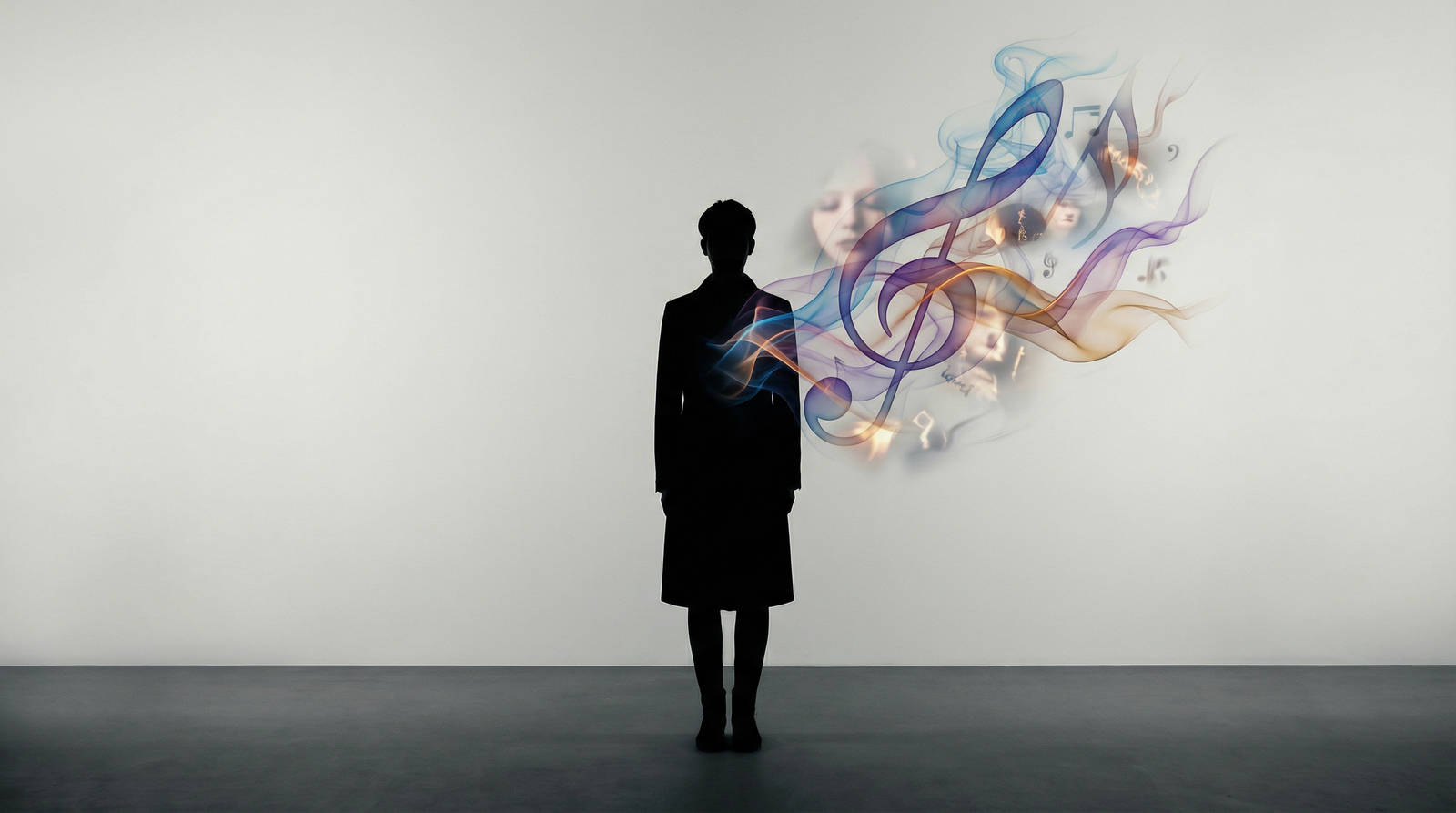
This music thing, that’s the strangest thing that the human being does without question. This music: it’s what allows us to believe that the movement of certain air waves can cause us to weep, remember, fall in love, feel as if our chest has split open. This music, it’s the one thing that the act of “art” can hardly begin to express.
Instead of being the ornamentation of life, music represents one of the oldest forms of thinking.
People were making music before writing philosophy, but music always strikes me as being far more philosophical than anything that’s been spoken. A song can convey something you’ve never articulated before, something you hadn’t even grasped yourself. In many ways, a simple change in chords will communicate the meaning of your whole life when no words will.
What makes music meaningful, anyway? It’s not the music itself, the frequencies themselves are nothing at all. The instruments themselves are nothing at all. The meaning comes from the hearer. That’s because music essentially involves the interaction of the physical and the mental. Get rid of the mental part and music becomes nothing but sound. What this essentially explains is that each time you hear a song, you are essentially co-authoring the song itself. When two people hear the same song, neither of them actually hears the same song. One hears childhood while the other hears heartbreak, another hears freedom. That explains why music can feel so intensely personal. It’s because it’s essentially composed of you yourself.
Finally, music has the ability to convey a truth that no words can: the fact that man thinks not in words alone. Before one puts feeling into words, one has it in rhythm. Before one verbalizes a thought, one has its tension and release, harmony and disharmony. A great deal of what passes as thinking can be best described as being musical rather than logical.
As this illustrates, music reveals the limitations of reason. Logic seeks clear answers; music welcomes uncertainty. A philosopher might wage a fifty-page battle over the existence of free will, while a minor chord can convey the same dilemma in three seconds. A musical phrase can also happily declare, “Two things can be right at the same time,” because harmony itself consists of multiple notes at once. This might be why adolescents seem to grasp the meaning of music deeper than adults do because they do not require the same level of clear answers.
There’s also the metaphysical dimension of music. You can’t grasp songs in your hands. You can’t see them or hold them at rest. They only exist through time, and then they vanish. And yet they seem even more real than things you can grasp. The existence of music is a reminder of the fact that the most crucial aspects of existence are transitory, intangible, unattainable. The song has ended, and you feel this strange sadness, and then you press repeat to bring it back to life.
This is the philosophical essence of music: the acknowledgment that beauty is transitory. All music demonstrates the truth of time’s invincibility because each note has its shelf life, the moment it is born, it dies. This aesthetic instructs one to acknowledge the immediacy of the moment because there can be no sustained state.
There are also many identity considerations when it comes to music. What constitutes the difference between “you” music and “not you” music? What does it mean when people can identify you from the music you listen to? What can “home” music be? Perhaps music is the only community where people feel comfortable enough to be truthful. You can’t relay that message to others through anything else, but through music preferences you will convey it.
And then there’s the community aspect of music, the one where strangers become temporary community at a concert, the power of a national anthem to move millions of people together, the power of a choir to combine dozens of voices to form one living entity. A world that’s fixated on the power of the individual needs music’s reminder of its ability to merge and resonate and belong.
What, then, is music? A language without words? A philosophy without arguments? A memory without images? It’s all of those things and something more: music: the affective architecture of human existence. In fact, it’s where we live, even when there’s no music playing.