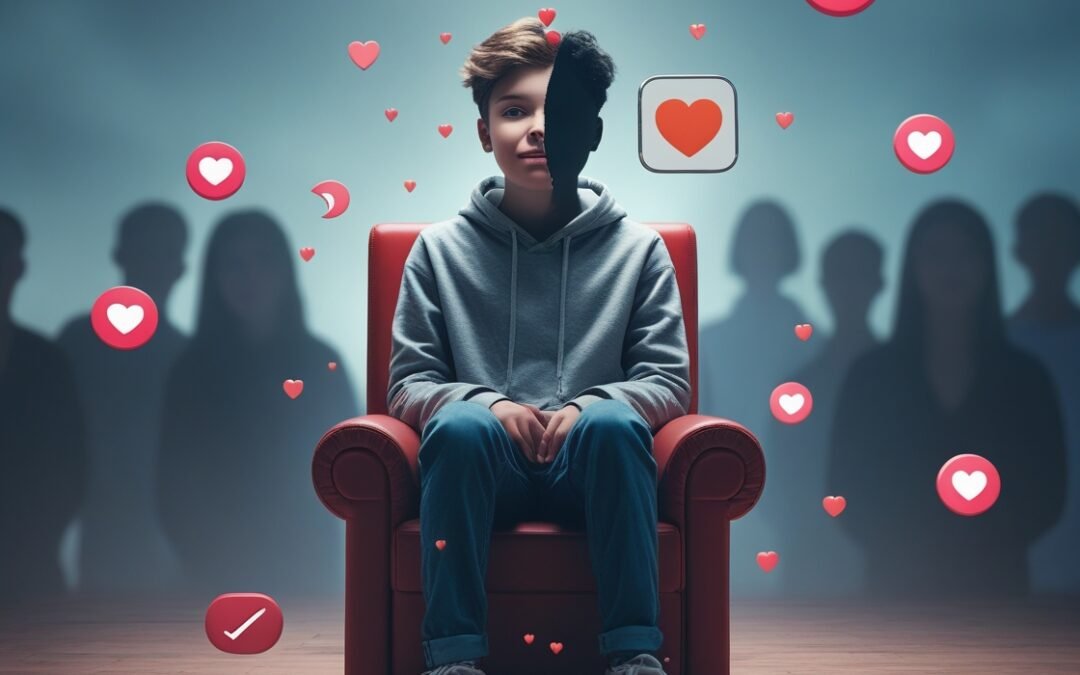
Scroll, swipe, like, repeat. Life has become so entwined with social media it is akin to breathing. But have you ever sat down and asked yourself one easy question: “Am I being me here, or am I pretending to get noticed?” This question alone puts us at an intellectual crossroads of ethics, identity, and technology.
In principle, ethics is just about what it is to lead a good life and to do the right thing. Social media makes that more difficult. Every tweet, every post, every selfie is a tiny moral decision: am I lying? Am I being generous? Am I influencing people’s attitudes? Even receiving likes is an ethical problem. When we stage our lives to be accepted, are we who we are or do we pretend to be a fake self to be accepted?
Existentialist philosophers like Jean-Paul Sartre could possibly teach us that social media encourages bad faith: when we deny our freedom and responsibility through compliance with what is dictated. With every post of exactly what we think all others want to see, we lose a piece of ourselves incrementally. We are players in a performance, drifting further away from the lower “who we are” through the hashtags and the filters.
But it is not all bad. Social media also gives activism, community, and creativity. To be ethical is not to relinquish social media, but to act responsibly on social media. Virtue ethics, which has Aristotelian roots, is founded on cultivating good character rather than on the rules. Used in this context, it is being cognizant of what your internet behavior says about you and what you value most: Are your posts generous, truthful, supportive? Do they make you the person you want to be? Psychology has something to explain as well. Study has shown that continuous feedback loops—comments, likes, shares—can drive self-perception. Social validation engages the brain’s reward system by releasing dopamine, a neurotransmitter that is linked with pleasure. This subtly adjusts conduct to where we prioritize exterior validation over interior satisfaction. The awareness of such influence is the starting point in reclaiming moral agency.
For young people, above all, this self-awareness is crucial. Social media is the international playground on which identities are being experimented with and tried on for size. It can magnify insecurities, dramatize social hierarchies, and skew views of self. But philosophy teaches that our moral value and worth come through self-examination, not screen approval. Your value does not arrive in followers or likes, it arrives in the way you act, the way you treat others, and the way you forge your character offline as well as online.
Take into consideration the aspect of social responsibility as well. A posting can influence another, albeit subconsciously. Posting false information, perpetuating stereotypes, or posting something that is offensive has ethical implications. Social media is not private, it is public. All actions collide with a larger web of people and concepts, keeping in mind that ethics are relative, not fixed.
The lesson of the story? Social media are not evil. But unless we pay attention, they can insidiously distort our self and values. Philosophical thought challenges us to balance: use these websites with creative and moral intention, but root yourself in something greater than fleeting validation. Question yourself: “Would I post this if nobody could like it? Am I posting my authentic self, or an expectation-built?”
Finally, social media ethics is freedom, responsibility, and honesty. It invites us to live today, to not be unconsciously conforming, and to build a character we can be proud of, both in the feed and in life. Being a teenager in the age of social media is hard, but philosophy gives us the tools for reflective choice, looking for meaning beyond the feed, and living ethically online.