The question of the meaning of life has often been addressed largely from the point of view of human experience—covering our values, hopes, and searches for meaning. But when one extends the domain of exploration to include existence as a whole, the question of this...

The CogiEra Blog
The Philosophy of Music: Why Sound Becomes Meaning
This music thing, that’s the strangest thing that the human being does without question. This music: it’s what allows us to believe that the movement of certain air waves can cause us to weep, remember, fall in love, feel as if our chest has split open. This music,...
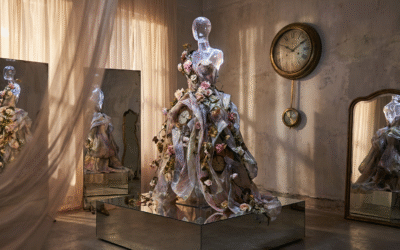
The Philosophy of Fashion: Why We Wear More Than Clothes
Fashion remains one of the least appreciated powers of the human experience. It’s something we treat as ornamentation: the surface level of the "real" thing. As if fashion itself was somehow less intellectual, less substantive and less meaningful than the "real" us,...
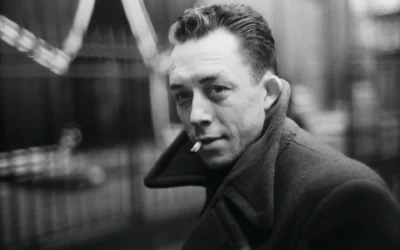
The Stranger: Why Meursault Threatens the World More Than a Criminal Ever Could
The world has a profound fear of impassive individuals. NOT the mass killers or the tyrants, the latter at least subscribe to the rules of hatred and greed etc. A Meursault, a man who passes through the pages of Albert Camus’s novel dazed and indifferent to the world...
The Infinite Regress Problem: Can explanations ever truly have a beginning?
We are designed to have explanations. When something happens, we say why. And when we do have an explanation, we say why we have that one. This can go on ad infinitum. Philosophers call this the problem of infinite regress, the idea that all explanation seems to need...
Buridan’s Donkey: Can too much rationality lead to paralysis?
Suppose there is a hungry donkey with two stacks of hay in front of it. Both stacks have the same height, same distance, and same nutritional value. The donkey, being a rational animal, will attempt to make the best choice. But since the two choices are equal, the...