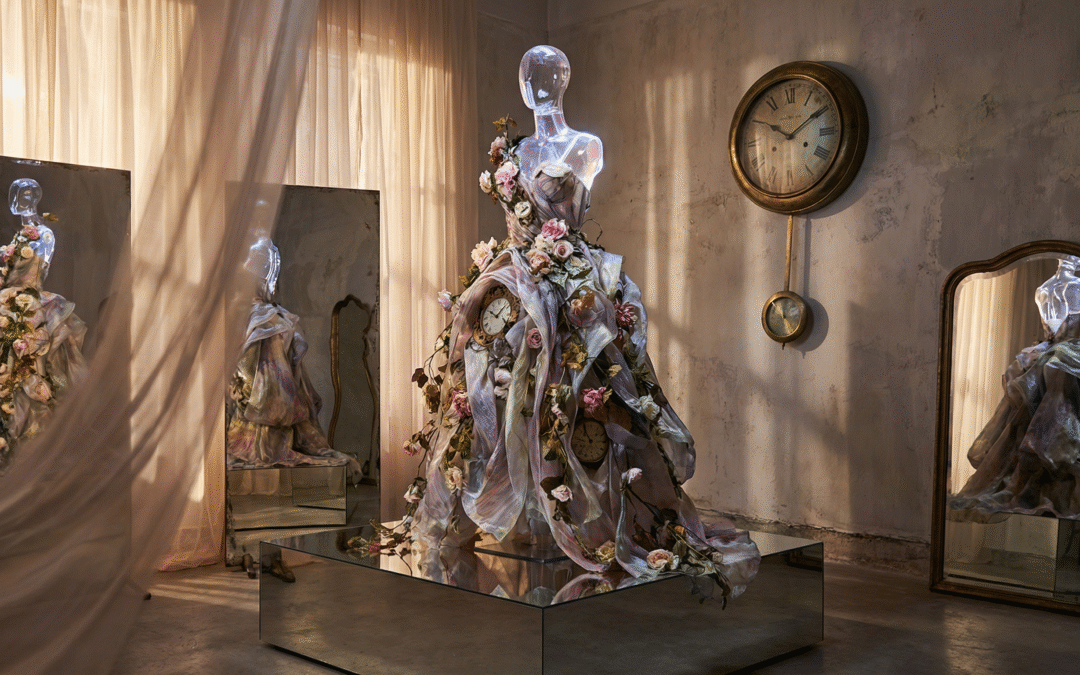
Fashion remains one of the least appreciated powers of the human experience. It’s something we treat as ornamentation: the surface level of the “real” thing. As if fashion itself was somehow less intellectual, less substantive and less meaningful than the “real” us, the part beneath the surface of the pretty dress. The truth: Fashioning yourself has been the longest-standing philosophical discourse humankind has ever made. Pre-writing. Pre-law. Pre-religion. Man has clothed himself. In doing so? He’s already been thinking, already been communicating, already constructing.
Clothing the body means making a statement about who we are, or who we want to be.
However, the catch: fashion can be both deeply personal and utterly social. You get dressed alone in your bedroom, but in the company of the world. And each decision, simple and extravagant, dark and colorful, fitted and loose, responds to an implicit question you yourself did not ask: What do you want the world to see? Even the statement of defiance, the rejection of fashion itself, itself constitutes a fashion statement, a message, a philosophy of nonconformity. The non-choice remains a choice.
Fashion reveals the conflict between authenticity and performance. This is what people want to believe about their fashion: that it’s an extension of their own authenticity, but alternatively, this can be the script that we are performing in order to play a part within the story. Consider this: Are you dressing yourself up for yourself or the audience you think is observing you? And does this ultimately even matter? Perhaps the human condition itself has been a combination of the two from the beginning.
Fashion is also a temporally invested field. A fashion product is always linked to its time, it’s politics, its anxieties, its dreams. Think Victorian corsets and punk leather jackets from the 90s. They are time capsules because of what society wanted the body to do, hide, or signify at a particular point in time. Fashion reveals the logic behind an era.
And then, of course, there’s the body itself. Fashion shapes the body, accentuates it, deceives it, liberates it. It shows us which bit of us to accentuate and which bit of us to temper and restrain. When you wear clothes, you are already engaging in a dialogue with the body you have. A suit shapes the body into form. A loose-fitting dress liberates the body into softness. Heels turn walking itself into an act. Every piece of clothing is a miniature philosophical treatise on what the human body should be.
There’s also the paradox of uniqueness. Fashion promotes itself as the vehicle of uniqueness, and nonetheless it’s based on imitation. Fashion spreads collective dreams. People dress the same not because they’re stupid but because humans are driven by the need to belong. To dress like others means “I belong to this world and this particular moment.” The only ridiculous thing about fashion is when it makes us united in its effect because each of us behaves as if we were the only ones.
However, the most profound philosophical level of fashion is this:
Clothing expresses the likeness of identity that can never be fully fixed.
You are never only one self. You are a self in motion, changing with age, mood, environment, desire. Fashion is the outer mask that adapts to the shifts happening inside. This explains why there are contradictions inside your closet: elegant today, messy tomorrow, soft tonight, sharp tomorrow. Apparel has been the best proof that humans are not static beings but rather developing ones.
Fashion doesn’t lie. People lie about fashion. They claim to be dressing practically, but “practical” can be a fashion statement. They say they’re communicating themselves through fashion, but the “self” being presented shifts by the hour. They say fashion is shallow, yet they feel differently about themselves when dressed in white rather than when dressed in darks. Fashion is neither shallow nor profound, it’s intimate. It’s a touch before the mind has the time to justify itself. This may be the point of fashion. It’s a reminder that we are corporeal selves who change before our own eyes from day to day, trying each morning to bridge the gap from who we happen to be to who we imagine others think we should be. Clothing is the bridge. Fashion: philosophy you can wear.